![Level Up [Game Dev Hub]](https://www.levelup-gamedevhub.com/wp-content/uploads/2022/06/Logo_LevelUp_HUB_Positivo-2.png)
Procedural Content Generation for video games, a friendly approach
Over the past few decades, the video game industry has undergone an impressive evolution, moving from simple pixels on monochrome screens to vast, detailed universes that offer immersive experiences to players. One of the pillars behind this transformation is Procedural Content Generation (PCG), a technique that has allowed developers to overcome resource and time constraints, while enriching the gaming experience with infinitely diversified and customizable worlds.
Listen to the audio generated from this article for greater accessibility
PCG refers to the use of algorithms and computational techniques to automatically generate data or content in video games, ranging from the generation of terrain, maps, levels, and textures to game elements such as enemies, events, and narratives. The beauty of PCG lies in its ability to create these elements dynamically and in real time, offering a diversity and richness that would be impractical to achieve manually.
Primitive examples of PCG can be found in games such as “Rogue” (1980), where each adventure offered a unique procedurally generated dungeon, posing new challenges and treasures with each playthrough. This approach not only increased the replayability of the game, but also introduced a sense of exploration and discovery that has become a desired element in many current titles.
Moving forward in time, contemporary games like “Minecraft” and “No Man’s Sky” have taken the PCG to new horizons. “Minecraft” uses the PCG to create vast open worlds filled with geographic diversity, where players can explore, build, and survive in environments that are unique to each game. On the other hand, “No Man’s Sky” expands the scale of the PCG to an entire universe, with more than 18 quintillion procedurally generated explorable planets, each with its own flora, fauna and ecosystems.
These examples illustrate how PCG has evolved from a tool for creating simple dungeons to a technique capable of generating entire universes, changing the way we design and experience video games. This is not only a technical solution, but also a design philosophy that empowers creativity and efficiency, redefining the possibilities of what video games can be.
Fundamentals of the PCG
Procedural Content Generation, although it may seem like a modern concept driven by recent technological advances, has roots that go deep into the history of computer science and video game design. Its core principle is to use algorithms to automatically create content that would otherwise require significant manual effort. This content not only covers the geometry of the game worlds, but also textures, narratives, and dynamic gameplay elements. PCG is a multidisciplinary field that relies on mathematics, computer science, and artificial intelligence, offering a rich palette of tools for developers.
Randomness vs. Pseudorandomness
At the heart of PCG lies the concept of randomness, or more precisely, pseudorandomness. Computers, being deterministic entities, cannot generate true randomness without an external source. Instead, they use algorithms to produce sequences of numbers that appear random, known as pseudorandom sequences. These sequences are predictable if the starting point, or “seed,” is known, allowing developers to reproduce the same results when needed, a crucial feature for debugging and fair play.
Deterministic Principles and Seeds
Deterministic principles ensure that, given a specific seed, the algorithm will always generate the same content. This approach has significant implications in game design, as it allows players to share unique procedurally generated experiences simply by sharing the seed used. Games like “Minecraft” exploit this aspect, where entire communities form around seeds that produce spectacular landscapes or particular challenges in the same single, automatically generated world.
Algorithms in PCG
PCG relies on a variety of algorithms, each with its own strengths and applications. Some of the most commonly used would be:
- Perlin Noise: A widely used technique to generate textures and terrains that simulate natural patterns. It was developed by Ken Perlin in the 80s and is instrumental in creating visual variation and complexity in games like “Minecraft,” where it is used to generate the topography of game worlds.
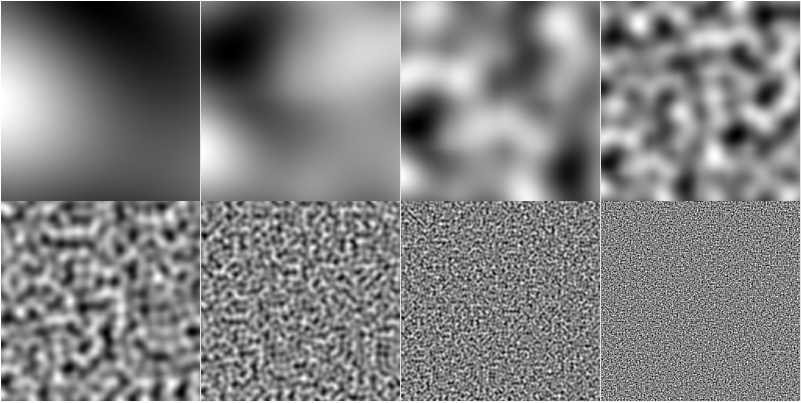
Examples of Perlin Noise - Dungeon Generation Algorithms: Based on graph theory and traversal techniques, these algorithms are essential for role-playing and exploration games, generating complex structures and mazes filled with enemies, treasures, and traps.

Procession-based DungeonL-Systems: Used to simulate plant growth and other fractal patterns in nature, L-Systems have applications in the generation of vegetation and ecosystems, adding a level of detail and realism to play environments.
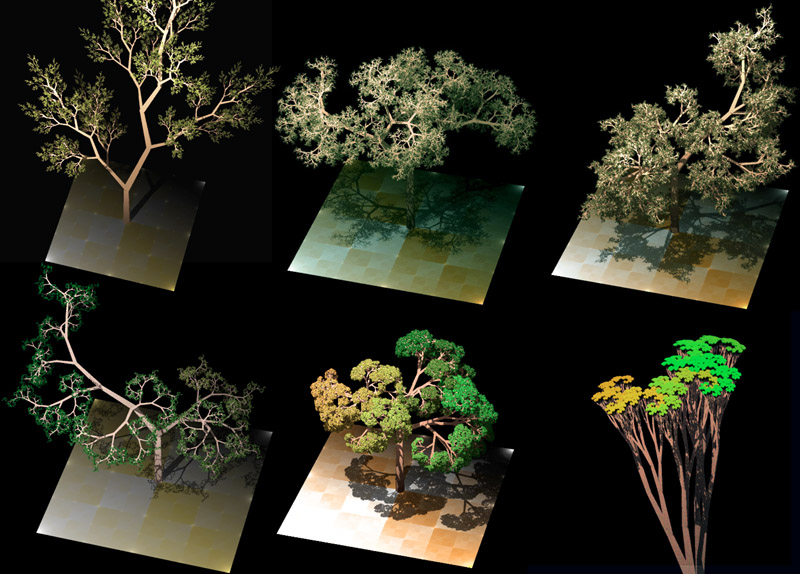
L-system – Wikipedia
The choice of algorithm depends on the specific objectives of the content to be generated, as well as the technical limitations of the project. Flexibility and customizability are two of the most significant advantages that PCG offers developers, allowing them to explore designs and concepts that would be impractical using traditional methods of content creation.
Design Implications
Implementing the PCG is not simply a technical exercise; It requires careful consideration of how the generated content will affect the player experience. Designers must balance variability and surprise with consistency and gameplay, ensuring that each generation offers interesting challenges and memorable experiences without compromising the quality or overall gameplay of the game.
The PCG also raises questions about authorship and creativity in video game design. As machines take on a more active role in content creation, designers are challenged to steer this generation toward outcomes that fulfill their creative vision, while maintaining the essence of the unexpected and the new that makes PCG so compelling.
Detailed Applications and Techniques
PCG manifests itself in a diversity of applications within video game development, each with its own techniques and challenges. Here are some examples where it is widely and frequently applied:
Tiles
- Mosaics are the basis of infinitely expandable worlds, such as those seen in “Terraria” where small pieces of terrain or rooms are assembled to create vast worlds or intricate dungeons. This technique, based on the strategic placement of predefined segments, allows generating from complex dungeons to varied landscapes, maintaining aesthetic and functional coherence. The main challenges lie in avoiding visual repetitiveness and ensuring that random generation does not compromise the gaming experience, solved by algorithms that weigh the diversity and cohesion of the design.
Grammars and L-Systems
- Grammars, especially L-Systems, are crucial for generating organic structures and cities in games like “Elite Dangerous,” where they simulate everything from stellar distribution to asteroid formation. These systems work by defining ground rules that are applied recursively to create complex patterns, allowing for everything from the creation of realistic vegetation to the architecture of alien civilizations. The challenge is to balance the complexity generated with the available processing power, often addressed through optimizations and limiting the level of detail according to the proximity of the player.
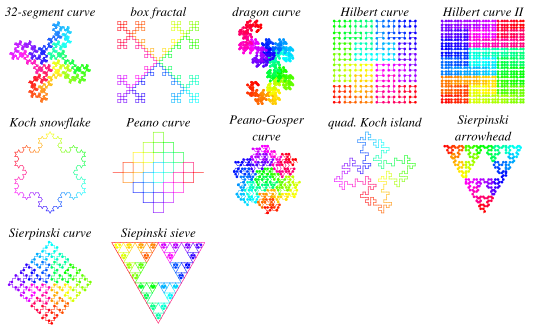
Lindenmayer System
Distributed Generation
- Distributed generation is applied in the creation of dynamic and realistic environments, employing techniques such as Perlin Noise to simulate terrain in “Minecraft“. This strategy is based on dispersing elements (such as flora, fauna, or geological features) in a way that mimics natural patterns, offering players rich and believable environments. Challenges include creating layouts that not only look natural, but also offer meaningful and varied interactions for the player, overcome by fine-tuning algorithms to balance randomness and intentional design.
Parametric and ECS (Entity Component System)
- The ECS, used in game engines such as Unity to manage entities and their interactions, supports efficient and adaptable PCG. By separating the properties (components) of entities from their behaviors (systems), it facilitates the generation of varied and dynamic game elements. A practical example would be the automatic generation of NPCs with variable attributes, skills, and roles in an RPG. The challenges center on maintaining a system flexible enough to allow for significant variations without overloading game logic or performance, often solved through modularization and intelligent reuse of components.
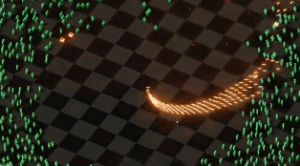
Poisson Disk Sampling:
- Poisson Disc Sampling is an advanced technique in PCG that ensures an even and natural distribution of elements within a play space. By defining a minimum radius between samples, this technique prevents excessive agglomeration, allowing the creation of scenarios such as forests or star fields where each object maintains a balanced distance from the others. A prominent use case would be the spatial distribution of natural resources in a survival simulator, where each resource is accessible but requires exploration. The main challenge lies in balancing this distribution with the game’s performance needs, especially in large, open environments. The solution often involves optimizing spatial search algorithms to make checking the proximity between elements as efficient as possible, thus maintaining the fluidity of the game without sacrificing the quality of the distribution.
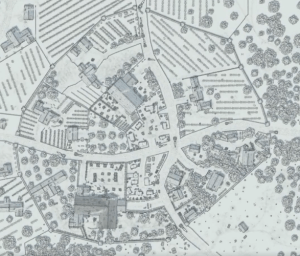
Combining 3 algorithms in TownScaper
The key to Townscaper’s success lies in the integration of several procedural generation systems that Oskar Stalberg, its creator, has perfected throughout his career. These systems analyze the current player-created structure and determine which predefined architectural pieces fit best into the available space, introducing fun and novel gameplay elements that players discover for themselves.
Algorithms Used
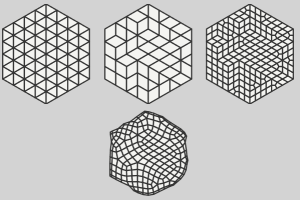
- Irregular Grids: Unlike previous projects, Townscaper uses irregular grids to generate its cities. Inspired by his work on Night Call, Stalberg developed a tool that deforms grids to better fit real urban forms, allowing structures to be created that respect the local topography.
- Wave Function Collapse: As in his previous game, Bad North, Townscaper employs a version of the Wave Function Collapse algorithm adapted to operate in real-time. This algorithm decides which building modules are valid for a given space, based on pre-set rules about which objects can be placed next to each other.
- Marching Cubes: To insert the building units within the irregular Townscaper grid, a technique similar to the Marching Cubes algorithm is used. This allows the pieces to be placed in a way that they fit the grid cells, especially in the corners of buildings.
Ethical Challenges and Considerations
Creative Balance and Randomness
One of the most significant challenges when using PCG is maintaining a balance between randomness and the creative intent of the designer. Procedural content generation can lead to unexpected results, some of them may be innovative and enriching, while others may be irrelevant or even problematic from a game design point of view.
Authenticity and Narrative
Another very interesting challenge is the generation of narratives using PCG, being a rather challenging challenge to be able to create cohesive and emotionally interesting stories from randomly generated elements. Some developers have explored techniques and strategies to infuse a sense of authenticity and purpose into procedurally generated narratives, such as integrating pre-designed story arcs with generated elements to form a cohesive story.
Ethical and Representational Considerations
The PCG also raises significant ethical considerations, especially in terms of representation and diversity. It must be taken into consideration how the random generation of characters, for example, must be handled with care to avoid stereotypes or offensive representations. This aspect is particularly critical in games that seek to reflect real-world diversity, requiring careful and inclusive algorithmic design.
Developer Responsibility
Deepen developer responsibility when employing PCG. Relying on algorithms to generate content does not absolve creators of their responsibility for the final product. This includes not only ensuring the quality and relevance of the content generated but also ensuring that the game offers a safe and respectful experience for all players.
Technical and Performance Challenges
In addition to ethical considerations, the technical challenges associated with GWP, such as optimization and performance, are crucial. Procedural real-time content generation can put a significant strain on system resources, especially in complex games with large open worlds. Some optimization strategies and technological solutions, such as the use of ECS systems to improve the efficiency and scalability of the PCG.
Known case studies:
Each case presents various aspects, from the creation of huge and detailed universes to the generation of complex stories and characters.
Spore ( Maxis, EA 2008 )
- Objective: To create a playable universe that would allow users to generate their own creatures, vehicles, and planets.
- Solution: Spore used a variety of PCG techniques, from parametric generation for creatures to distribution algorithms for planetary ecosystems.
- Conclusion: The flexibility in the creature design allowed players to express their creativity in unexpected ways, generating an active community around the game. However, the challenge of creating cohesive narratives in a user-generated universe highlighted the need to balance procedural generation with manually designed elements.
No Man’s Sky ( Hello Games, 2016 )
- Challenge: Generate an almost infinite universe of explorable planets, each with its own flora, fauna and geology.
- Solution: No Man’s Sky employed an advanced combination of PCG algorithms to create more than 18 quintillion unique planets.
- Conclusion: The initial release of the game showed the importance of aligning players’ expectations with the game’s capabilities. Successive updates have significantly improved the experience, adding content and features requested by the community, demonstrating the importance of post-launch iteration.
Minecraft ( Mojan Studios, Microsoft 2009 )
- Challenge: Create an open and persistent world that offers new experiences every time a player starts a game.
- Solution: Using mostly Perlin Noise, Minecraft generates vast and varied terrains where players can explore, build, and survive.
- Conclusion: The simplicity in Minecraft’s PCG approach has allowed for almost limitless extensibility through mods and community updates, highlighting the importance of a solid foundation on which players and developers can build.
Dwarf Fortress ( Bay 12 Games, Kitfox Games 2022 )
- Challenge: Generate rich stories and detailed worlds that evolve over time and player actions.
- Solution: Dwarf Fortress combines PCG algorithms to generate geography, history, cultures, and characters, creating a complex and living world.
- Conclusion: The depth and complexity of the worlds generated in Dwarf Fortress demonstrate the potential of the PCG to create deep narratives and gameplay experiences. However, it also highlights the challenge of making these systems accessible and understandable to players.
The Future of the PCG
Procedural Content Generation has transformed the way video games are created and experienced, offering richer worlds and more varied and personalized gaming experiences.
Artificial Intelligence and Machine Learning
One of the most promising areas for the future of PCG is the application of Artificial Intelligence (AI) and Machine Learning. These technologies have the potential to revolutionize these techniques, allowing the generation of even more complex and adaptive content. Imagine AI systems capable of learning from player interactions to generate personalized challenges and narratives in real-time, or analyzing vast amounts of game design data to automatically create levels that perfectly balance difficulty and fun.
Designer-Guided Proceduralism
As procedural techniques become more advanced and capable, there is a need for a more nuanced approach that balances automated generation with the designer’s creative vision. “Designer-led proceduralism” could emerge as a key paradigm, where developers set the rules and parameters within which these systems operate, ensuring that procedurally generated content remains aligned with the game’s design goals and desired player experience.
PCG and Narrative
It also promises significant advances in the generation of narratives. With more sophisticated techniques, games could generate complex stories and characters with emotional depth, all in real time. Not only would this make each gameplay experience unique, but it would also allow for narratives that adapt and branch out based on the player’s decisions and actions in currently unimaginable ways.
Conclusion
Procedural Content Generation is at an inflection point, with the potential to fundamentally change the creation and experience of video games. As we explore new technologies and approaches, it will remain at the center of game design innovation, promising richer and more engaging worlds, more personalized experiences, and more immersive narratives. As we move into this exciting future, it is essential that we maintain an open dialogue about the possibilities, challenges, and responsibilities that come with using these powerful tools.